

Satisfy your Chinese takeout cravings but skip the carbo-load with this konjac noodle dish that tastes just like lo mein!
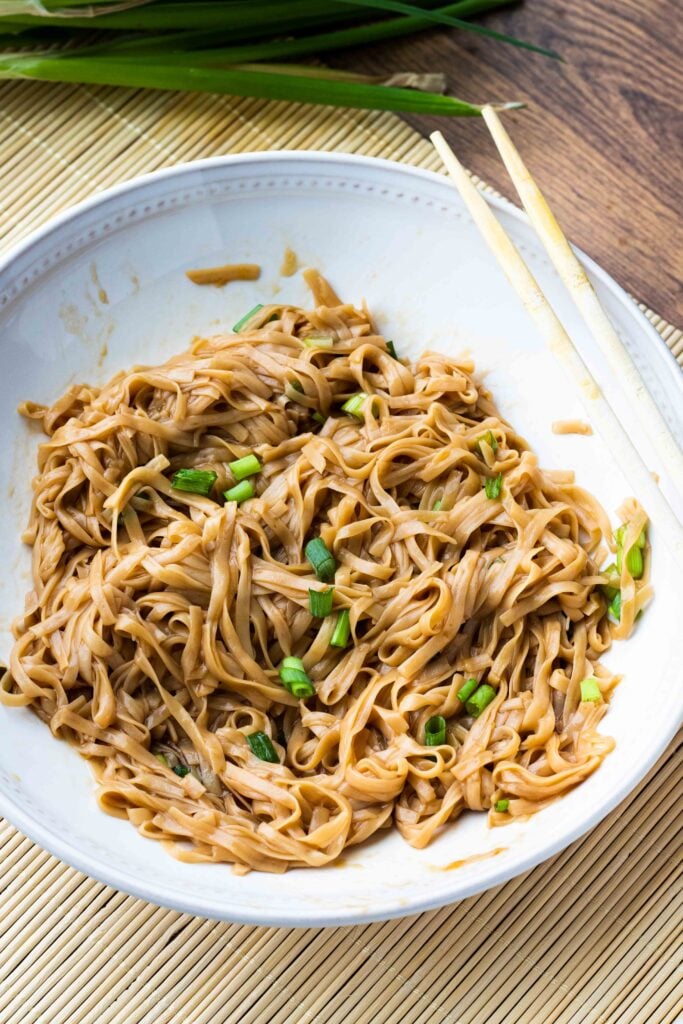
One of the really fun parts about going low-carb is discovering new ingredients. I’d never heard of konjac noodles until I mentioned to a friend that I missed Chinese takeout food. She and I used to devour whole containers of lo mein while studying for our college exams—so her recommendation held sway.
The marinade was her idea, too. In fact, she had three pieces of advice about konjac noodles that came in super handy: Don’t be put off by the smell when you open the package, rinse the noodles really well, and marinate them in something deeply flavorful. This keto noodles recipe is a direct result of her guidance.
I’ve always liked the way soy sauce and rice vinegar play off each other in a sauce. They set the tone in this recipe’s marinade with a perfect balance of tangy and savory notes. The lime juice brings in some fresh brightness, the brown sugar substitute adds a touch of sweetness, and the green onions keep the whole thing grounded in savory earthiness.
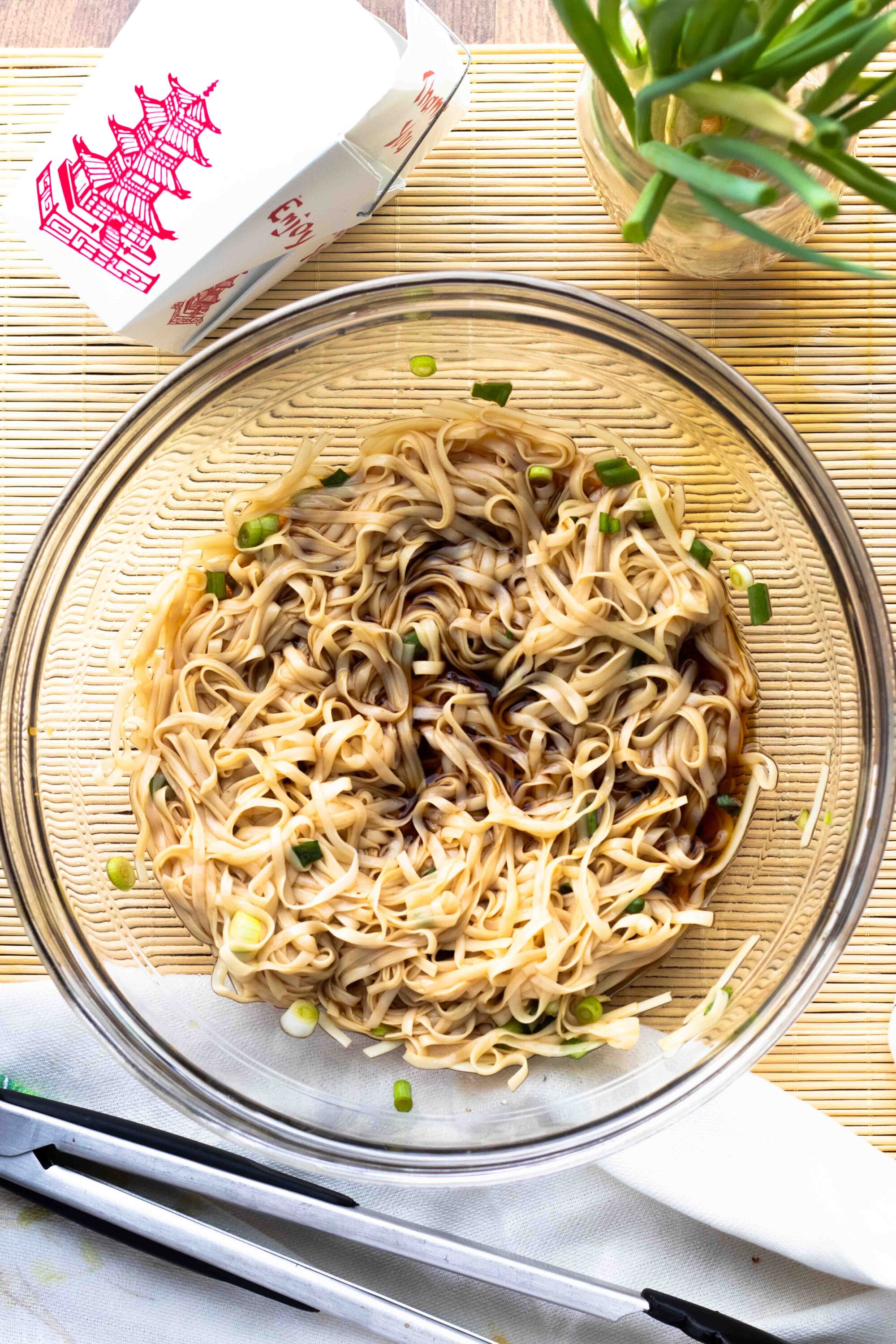
It’s important to get that marinade right because the konjac noodles themselves have very little flavor. But they soak up all the nuances of the sauce while they marinate—so the longer they sit, the better! This dish has become one of my favorite weekend treats. I’ll mix it up Friday after work and look forward to slurping it down all through my Saturday errands!
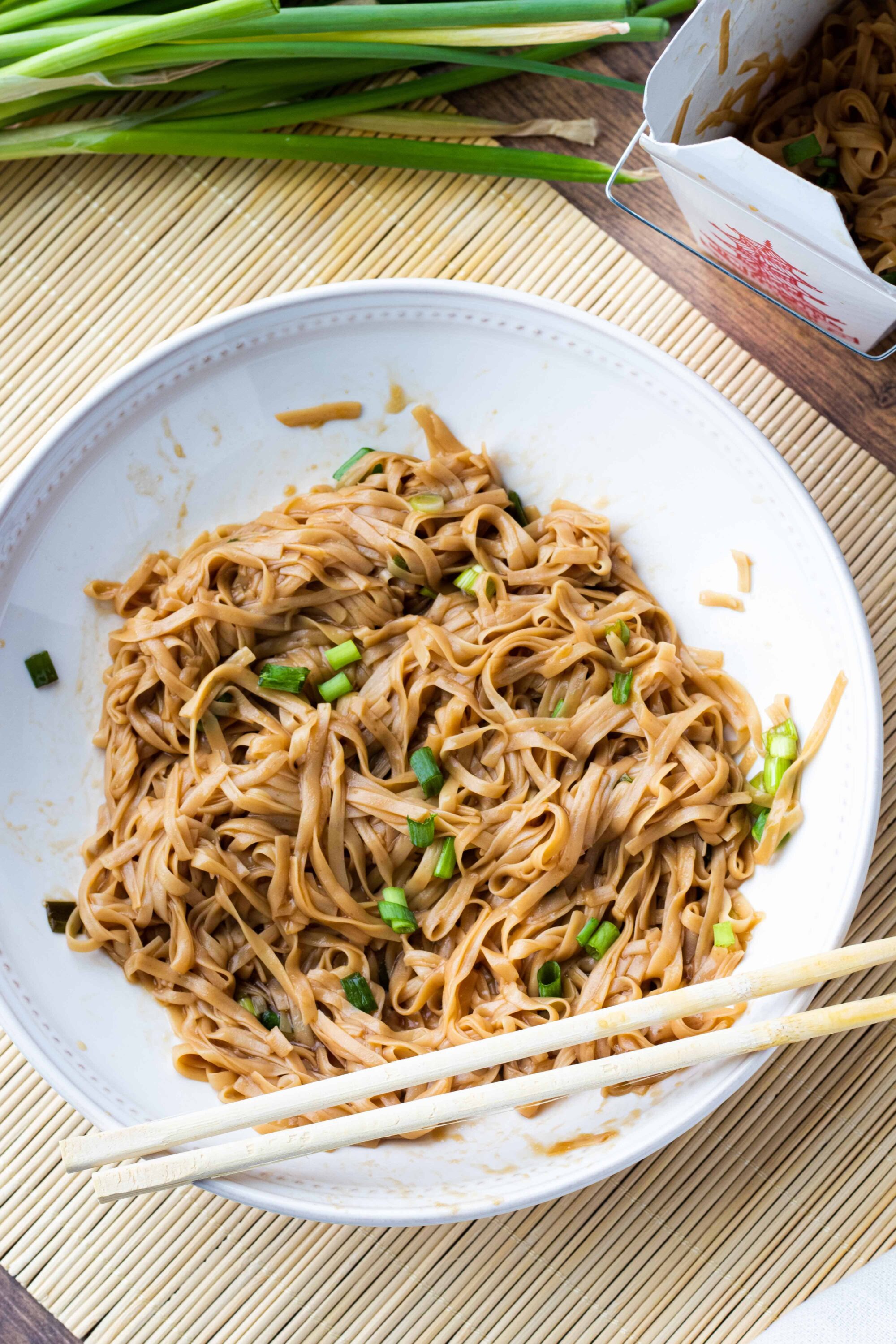
Are konjac noodles and shirataki noodles the same thing?
Yes, basically. Both noodles come from the root of the exotic-looking konjac plant—aka Amorphophallus konjac or “devil’s tongue yam.” This tuber is peeled, cleaned, and ground into a fine flour. Mixing this flour with water and a little limewater (calcium hydroxide) creates a dough that is then shaped into noodles. The result is a chewy, nearly calorie-free pasta alternative that contains 97% water and about 3% glucomannan fiber.
The term shirataki describes the thin, white, translucent noodles created from konjac flour—literally translating to “white waterfall” in Japanese. All shirataki noodles use konjac as their base, making the names interchangeable.
How do I store leftovers?
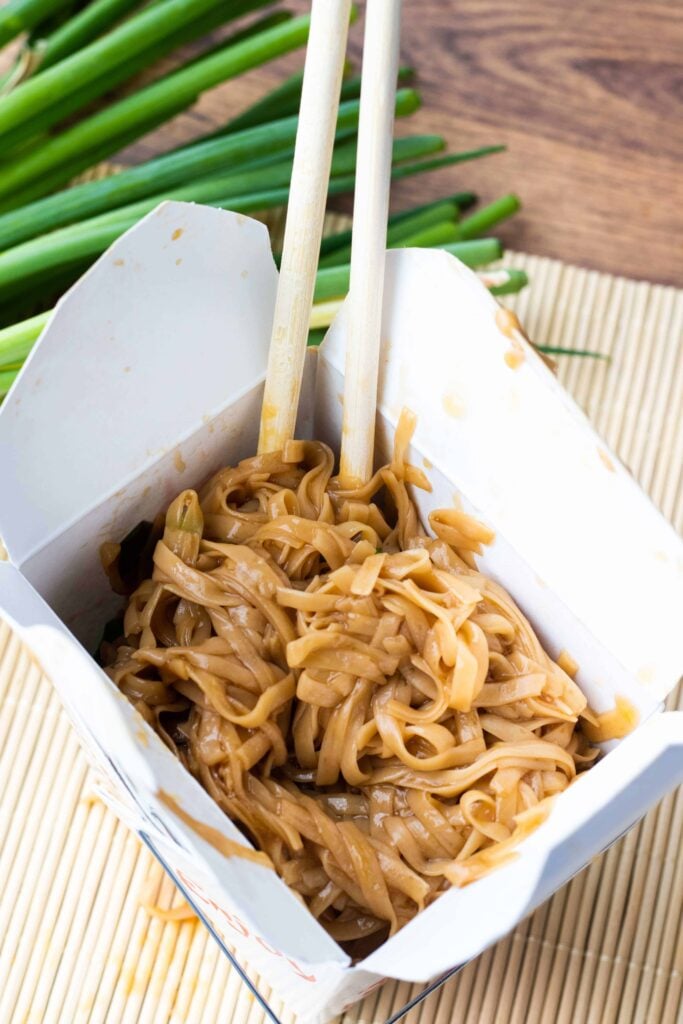
Let your keto noodles cool completely, then store leftovers in an airtight container in the refrigerator for up to 3–4 days. Avoid freezing this dish, as konjac noodles lose their texture and can become unpleasant after freezing and thawing. To reheat, add a splash of oil and toss the noodles in a skillet over medium heat, stirring frequently, until piping hot throughout.
Similar recipes to try
Hungry for more low-carb, Asian-inspired dishes to make at home? Use your Instant Pot to whip up Takeout-Style Low-Carb Beef And Broccoli faster than delivery. Or use just one skillet to make a Keto 15-Minute Stir-Fry in even less time. And put a Japanese spin on your appetizer spread with this Keto Sushi Recipe.
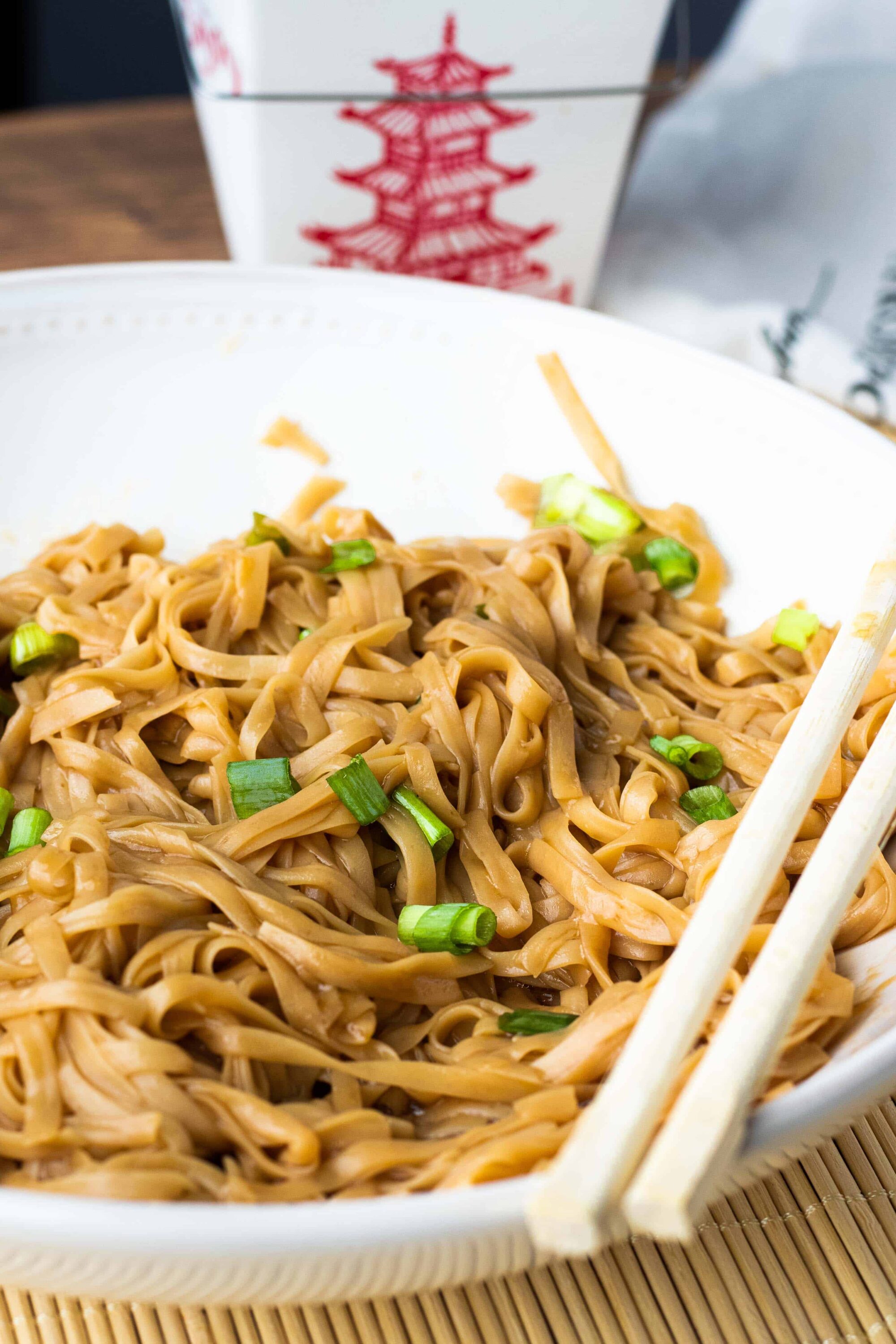
Keto Noodles Recipe (Keto Lo Mein)

Ingredients
- 1 pound konjac noodles
- 1/3 cup coconut aminos or soy sauce
- 3 teaspoons rice vinegar unseasoned
- 1/4 teaspoon lime juice
- 1/3 cup water
- 2 teaspoons brown sugar substitute
- 2 green onions thinly sliced, reserve 1 tablespoon for garnish
- 1 tablespoon sesame oil
- 1/4 teaspoon xanthan gum
Instructions
- Place the noodles in a colander and rinse with cold water for at least 1-2 minutes, following the package directions. This helps remove their natural odor and excess liquid.
- While the noodles drain, whisk together the coconut aminos (or soy sauce), rice vinegar, lime juice, water, brown sugar substitute, and all but 1 tablespoon of the green onions in a large mixing bowl.
- Add the well-drained noodles to the bowl with the marinade. Toss thoroughly so the noodles are evenly coated. Cover and refrigerate for at least 3 hours, or overnight for deeper flavor.
- When you're ready to cook, place a fine sieve over a large bowl and drain the noodles, catching the marinade below.
- Heat the sesame oil in a large skillet over medium-high heat. Add the drained marinated noodles and toss with tongs for 2–3 minutes. The noodles will sizzle and may pop—keep stirring until they’re heated through and slightly dry. Transfer to a serving bowl.
- Reduce the heat to medium. Pour the reserved marinade into the skillet. When it starts to bubble, sprinkle the xanthan gum evenly over the top, whisking continuously until the mixture thickens, about 1-2 minute.
- Pour the sauce over the noodles and garnish with reserved green onions. Serve hot.

Leave a Comment